Stopping Problems Diagnosed Before Driving Further
Mobile Brake System Repair in Canyon for reduced braking, unusual noises, warning indicators, or suspected safety concerns
Reduced braking performance, grinding or squealing noises, brake warning lights, or a soft pedal indicate worn or malfunctioning brake components that should be inspected before driving the vehicle further. Mobile brake service allows inspection and repair at your location when the vehicle should not be driven due to safety concerns, avoiding the risk of operating a vehicle with compromised braking. JMA Repair diagnoses brake problems to identify which components are worn, leaking, or malfunctioning, then replaces pads, rotors, drums, calipers, hydraulic lines, or air brake system parts based on what the inspection reveals.
Brake service covers conventional hydraulic systems on passenger vehicles and trucks, as well as heavy-duty air brake systems on commercial vehicles and supported heavy equipment. Diagnosis involves measuring brake pad and rotor thickness, inspecting caliper operation for seizure or uneven pad wear, checking hydraulic lines for leaks or corrosion, testing brake fluid condition, and verifying air brake system pressure and valve function. Field conditions allow many brake repairs on site, including pad and rotor replacement, caliper service, hydraulic line repair, and air brake adjustments when access and workspace permit safe completion.
Request an inspection immediately when you notice braking distance increases, the pedal feels different, or unusual sounds occur during braking.
How Brake Diagnosis Identifies Necessary Repairs
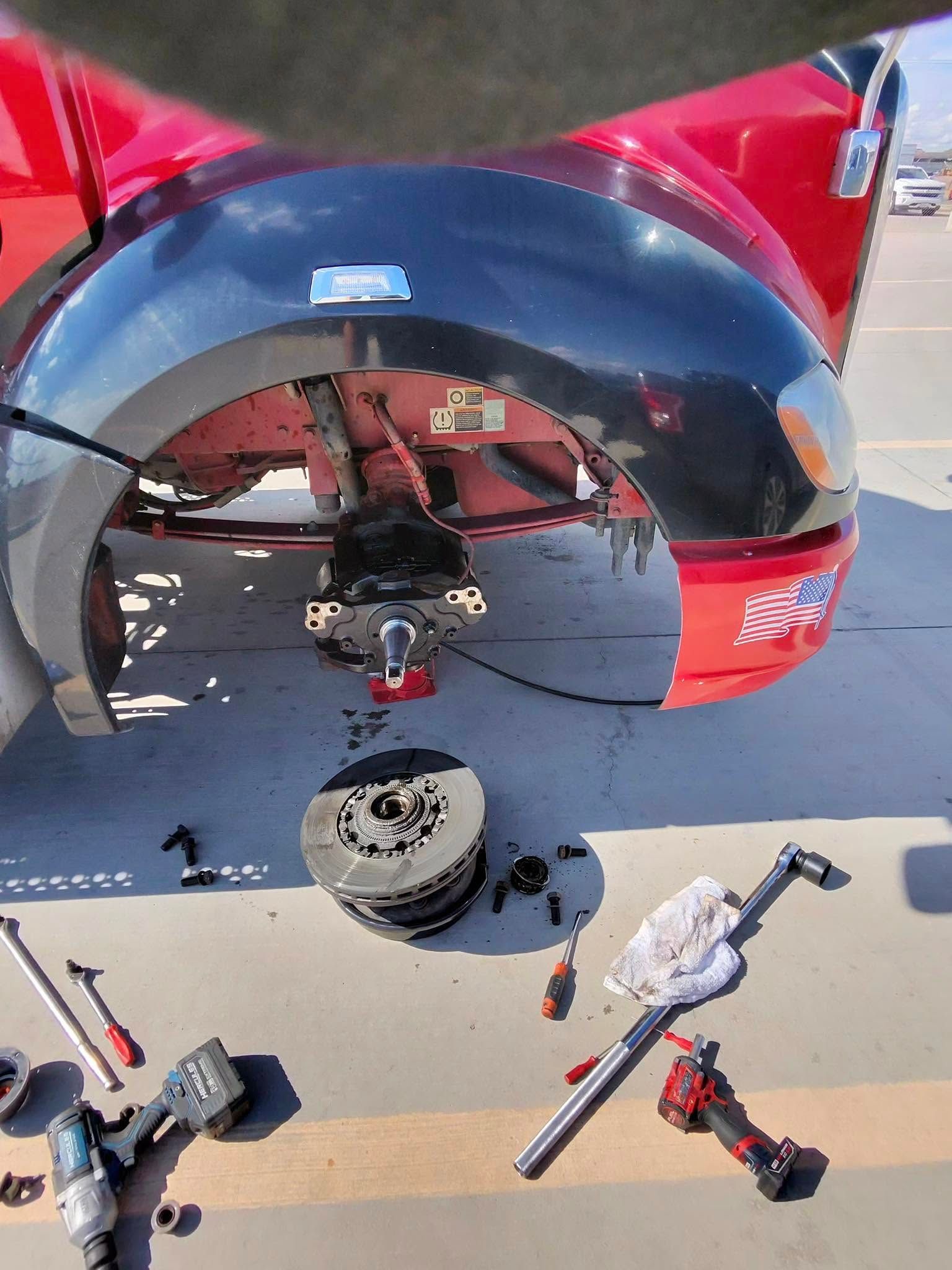
Brake inspection measures remaining pad material against minimum thickness specifications, checks rotors and drums for grooves or warping that prevent smooth contact, and observes caliper movement to confirm pistons retract fully and apply evenly without sticking. Hydraulic system inspection looks for fluid leaks at calipers, wheel cylinders, brake lines, and master cylinder connections, while fluid condition is checked for contamination or moisture that reduces boiling point and braking efficiency. Air brake inspection on heavy-duty applications involves testing compressor output, checking air tank pressure buildup, verifying brake chamber diaphragm condition, and confirming that valves release air when pedal pressure is removed.
Once repairs are completed, you notice restored stopping power when pads and rotors make full contact across their surfaces, elimination of grinding noise after worn pads no longer allow metal-to-metal contact, and consistent pedal feel when calipers operate freely without sticking or uneven pressure. Brake warning lights clear when hydraulic pressure stabilizes and fluid level returns to specification after leaks are repaired. Air brake systems maintain pressure without excessive compressor cycling once leaks in lines, chambers, or valves are sealed.
Conventional automotive braking systems and heavy-duty commercial air brakes both receive field service when conditions allow safe work, though some brake repairs requiring specialized press equipment or extensive disassembly may need shop facilities. The mobile advantage applies when a vehicle should not be driven due to suspected brake failure, allowing inspection and often repair without risking further operation on compromised braking components.
Brake Service Questions You May Have
Brake problems create safety concerns that require prompt inspection, and understanding what symptoms indicate helps you recognize when service becomes urgent rather than routine maintenance.
What does grinding noise during braking indicate?
Grinding typically means brake pads have worn through their friction material completely, allowing the metal backing plate to contact the rotor or drum directly, which damages the braking surface and requires both pad and rotor or drum replacement.
Can brake service be completed on site for heavy equipment?
Yes, when the equipment uses air brakes or hydraulic brakes accessible without major disassembly, field service includes replacing brake chambers, adjusting slack adjusters, repairing air lines, or servicing calipers and pads based on what inspection reveals.
How do you diagnose soft or spongy brake pedal feel?
Soft pedal feel often results from air in the hydraulic lines, which is addressed by bleeding the system, or from leaking components that prevent full pressure buildup, requiring inspection of calipers, wheel cylinders, and brake lines for fluid loss.
What brake problems make it unsafe to drive the vehicle to a shop in Canyon?
Severe brake fade, complete loss of pedal pressure, grinding noise indicating metal-to-metal contact, or brake warning lights combined with reduced stopping power all suggest the vehicle should remain stationary until inspection confirms safe operation.
Does mobile brake repair include air brake system service?
Yes, JMA Repair services air brake components including compressors, air tanks, brake chambers, slack adjusters, valves, and airlines on semis, commercial vehicles, and heavy equipment where air brakes are installed.
JMA Repair responds to brake concerns at your location, performing inspection and providing a detailed explanation of which components need replacement before unsafe conditions worsen. Schedule an on-site brake inspection when you experience any change in braking performance, unusual noises, warning indicators, or reduced confidence in the vehicle's ability to stop safely.