Field Service for Machinery That Cannot Move
Heavy Equipment & Excavator Repair in Canyon, TX for construction machinery too large to transport to a conventional shop
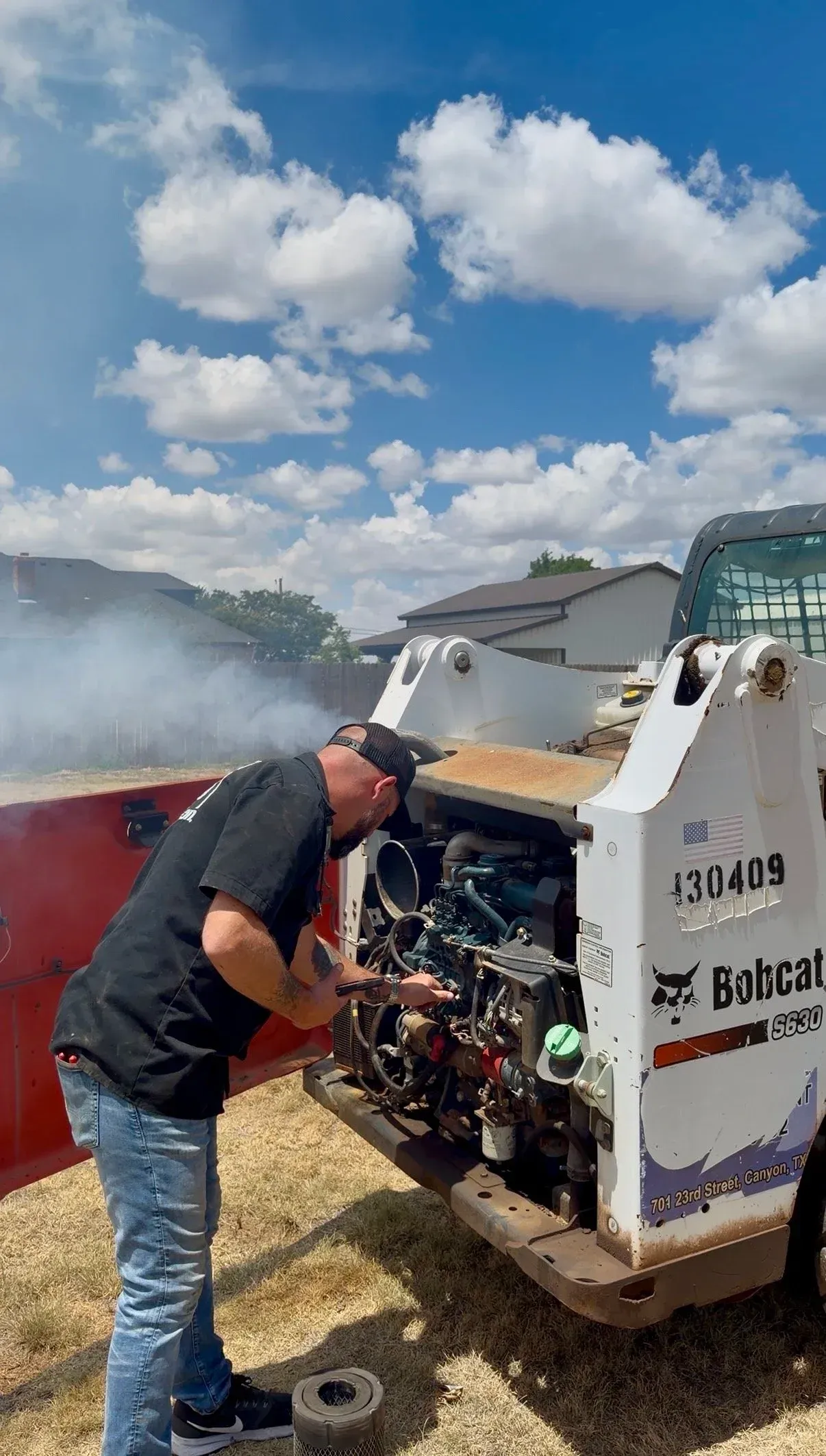
Excavators, Bobcat skid steers, loaders, and other construction or earthmoving equipment often experience mechanical failures at job sites, equipment yards, or remote properties where hauling the machine to a repair facility involves significant expense and logistical complexity. JMA Repair provides field diagnostics and repair directly at the equipment's location, addressing hydraulic line and pump failures, undercarriage and track servicing, pin and bushing wear, engine repairs, and mechanical troubleshooting for contractors, equipment operators, property owners, and businesses managing heavy machinery. Justin's broad mechanical background allows troubleshooting across different equipment types, even when the machine is an older model or uses unfamiliar configurations.
Field service eliminates the need to arrange flatbed transport, pay for crane loading, or wait weeks for shop availability when the equipment is already stationed at the work site. The mechanic arrives with diagnostic tools, hydraulic testing equipment, replacement hoses, seals, filters, and common wear components that address the majority of field failures.
Schedule field service and provide the equipment type, location, and symptoms when requesting assistance.
What Proper Heavy Equipment Repair Requires
Heavy equipment repair involves hydraulic systems operating at pressures exceeding 3,000 PSI, tracks or tires supporting multi-ton loads, and engines subjected to extended high-load operation in dusty or muddy conditions. Diagnosing failures requires pressure testing hydraulic circuits, inspecting cylinder seals for leaks, measuring track tension and wear, checking engine compression, and verifying electrical circuits that control solenoids and sensors. Replacement involves removing heavy components with chain hoists or hydraulic jacks, sourcing OEM or compatible aftermarket parts, and reassembling systems to manufacturer torque specifications.
After repairs are completed, the equipment regains full hydraulic lifting capacity, tracks move without slipping or derailing, engine power returns to normal operating levels, and the machine resumes excavation, loading, or grading tasks without further interruption. Contractors avoid losing billable hours waiting for the machine to be transported and returned, and project timelines stay on schedule.
Major rebuilds involving complete engine overhauls, transmission replacements, or structural welding that require overhead cranes or shop-mounted presses can be coordinated for transport to a facility with the necessary infrastructure. The field visit still provides diagnostic clarity and a detailed repair plan before the equipment leaves the job site.
Equipment Operator Questions
Heavy equipment failures often involve unfamiliar systems, so clarifying service scope and repair processes helps set accurate expectations before arranging field service.
What types of heavy equipment can be serviced in the field?
JMA Repair handles excavators, Bobcat skid steers, loaders, and other construction or earthmoving equipment, provided the repair does not require shop-mounted cranes, large presses, or machine tools unavailable in the mobile unit.
How are hydraulic leaks diagnosed and repaired?
Hydraulic failures are traced by pressurizing the system, visually inspecting hoses and fittings for leaks, testing cylinder seals for bypass, and replacing failed lines, seals, or pumps with compatible components sized for the equipment's operating pressure.
Can field service handle track and undercarriage problems?
Track tension adjustments, roller replacements, sprocket wear inspections, and pin and bushing servicing are completed in the field using portable jacks and hand tools, though complete track replacement on larger excavators may require additional equipment.
What happens if the equipment is located on rough terrain?
JMA Repair brings tools and jacks designed for uneven surfaces, but some repairs require stable ground and safe access, so site conditions are evaluated during the initial diagnostic visit.
How does service in the Texas Panhandle differ from other regions?
Dusty conditions common in this area accelerate filter clogging, seal wear, and hydraulic contamination, so field service often includes fluid sampling, filter replacement, and seal inspection as part of the diagnostic process to prevent recurrent failures.
JMA Repair provides field service for heavy equipment and excavators throughout the Texas Panhandle, with availability at job sites, equipment yards, and rural properties. Provide the equipment make and model, describe the failure symptoms, and confirm the site location when arranging service to ensure the mechanic arrives prepared for the specific repair.