Reliable Starting When Equipment Refuses to Crank
Starting & Battery Systems in Canyon for vehicles and equipment that will not start or experience repeated battery failure
A vehicle that cranks slowly one morning and fails completely the next often points to more than just a worn battery, and JMA Repair provides mobile starting and battery system diagnostics in Canyon for passenger vehicles, semis, RVs, generators, heavy equipment, boats, and motorcycles. When starting problems appear intermittently or a new battery dies within weeks, the underlying cause usually lies in the charging system, starter draw, or wiring rather than the battery itself. Mobile service becomes especially valuable when the equipment cannot reach a shop under its own power.
Starting-system failures stem from several possible sources including weak alternator output, excessive starter current draw, parasitic drain on the battery, corroded cable connections, or failing voltage regulators, making proper testing essential before parts are replaced. Testing includes battery load analysis, charging-system voltage checks at idle and higher RPM, starter amperage draw measurement, alternator diode testing, and inspection of all major electrical connections from the battery to the starter and alternator.
Schedule an on-site diagnostic at your home, business, job site, or roadside location to identify the specific cause of starting failure.
What Proper Testing Reveals Before Parts Are Replaced
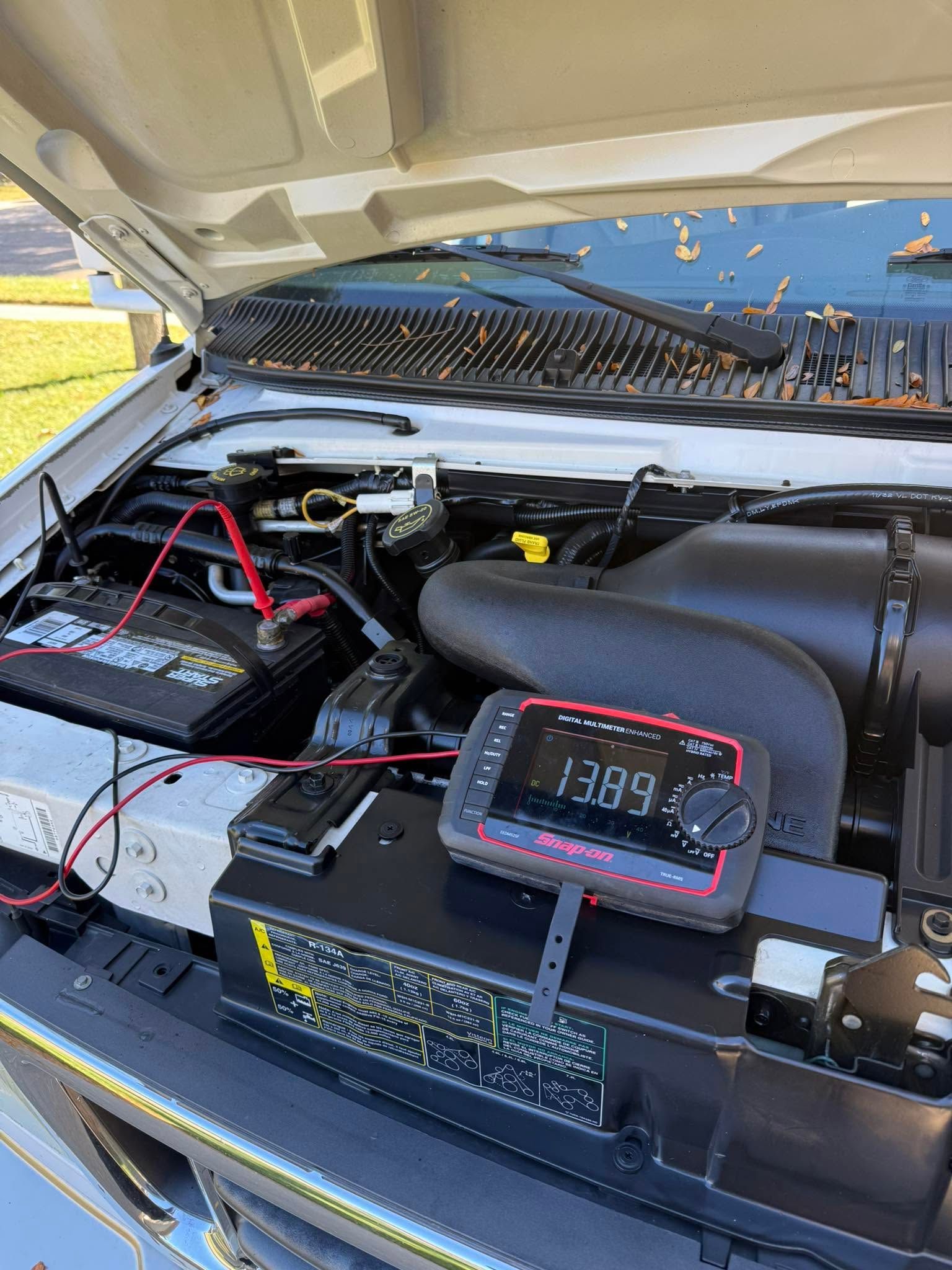
Battery testing under load measures the cell's ability to deliver cranking amperage rather than just surface voltage, while charging-system analysis tracks alternator output across varying electrical loads to confirm whether the battery receives adequate charge during operation. Starter current draw testing identifies motors pulling excessive amperage due to worn brushes or tight bearings, and wiring inspection locates high-resistance connections that prevent full voltage from reaching the starter during cranking.
After diagnostics and repair, the vehicle cranks immediately with strong turnover speed, the battery holds charge between uses without repeated jump-starts, and electrical accessories operate without dimming headlights or voltage drops. The charging system maintains correct voltage whether the engine idles in traffic or runs equipment at higher RPM, and the battery no longer drains overnight or between infrequent use.
The process begins with on-site testing and a quote based on findings, with most repairs completed at the location and larger jobs moved to the shop when components require removal or specialized equipment. Testing determines whether the no-start condition results from the battery, alternator, starter, wiring, or another electrical fault, preventing unnecessary part replacement and ensuring the repair addresses the actual failure rather than the most visible symptom.
Questions Before Starting Your Diagnostics
Customers working with starting and battery systems in Canyon often ask about testing procedures, repair timelines, and what to expect during mobile service calls.
What causes a battery to fail repeatedly even after replacement?
Repeated battery failure typically results from undercharging due to a weak alternator, excessive parasitic drain from electrical accessories left on or faulty modules, or overcharging from a failing voltage regulator that boils the electrolyte and damages the cells.
How is starter performance tested without removing the component?
Starter testing uses a clamp-style ammeter to measure current draw during cranking, comparing the amperage against manufacturer specifications to identify motors with worn brushes, damaged armatures, or bearing drag that pull excessive current and drain the battery.
When should starting-system repairs be completed at the shop instead of on-site?
Repairs move to the shop when the starter or alternator requires removal for rebuild or replacement in tight engine compartments, when parts must be bench-tested before installation, or when the vehicle needs lifting for safe access to electrical components mounted underneath.
What happens during the on-site diagnostic process?
The diagnostic begins with battery load testing and voltage measurement, followed by charging-system checks at idle and higher RPM, starter current draw analysis during cranking, and visual inspection of all battery cables, ground straps, and major electrical connections for corrosion or damage.
How does mobile service work for equipment that cannot be driven?
Mobile diagnostics bring all necessary testing equipment to the location where the vehicle or equipment sits, whether that location is a driveway, job site, business parking lot, or roadside breakdown point, eliminating the need for towing and allowing immediate diagnosis of no-start conditions.
JMA Repair provides mobile starting and battery diagnostics across passenger vehicles, commercial trucks, RVs, and heavy equipment in Canyon, with on-site testing that identifies the specific electrical fault before parts are ordered. Request a mobile appointment for diagnostic service at your location.